
How to Build a Mediterranean Cheese Board
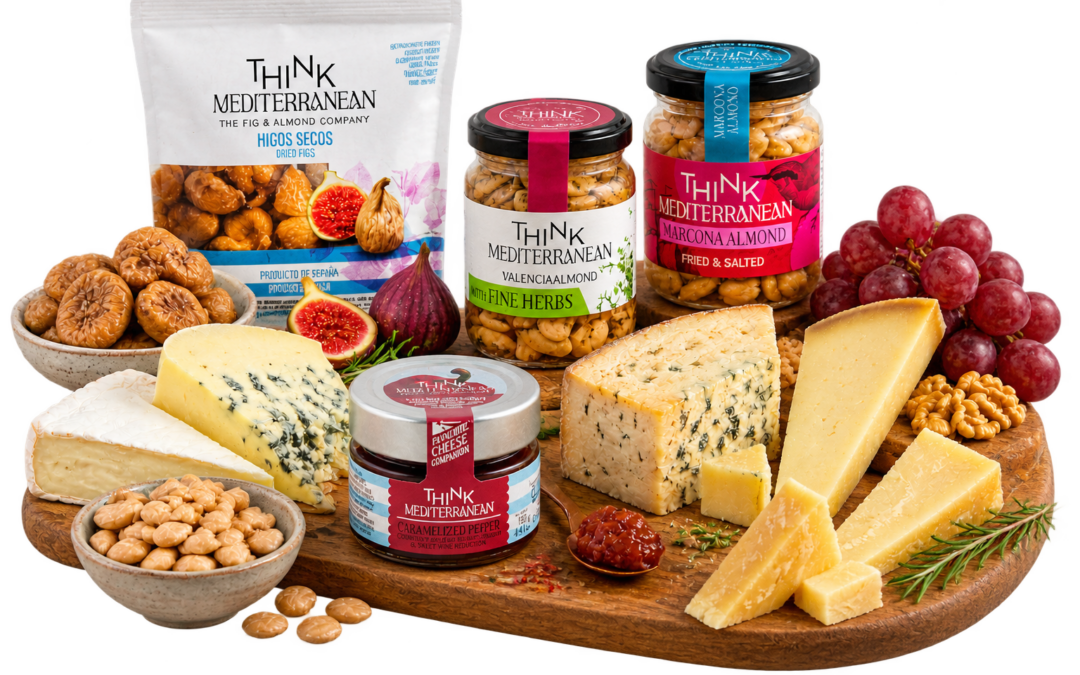
A Mediterranean cheese board does not need dozens of ingredients to feel generous.
The most interesting boards are usually built around contrast: creamy and firm cheese, sweet dried fruit, crunchy nuts, salty charcuterie and a few accompaniments that bring everything together.
The Mediterranean approach makes this especially easy.
Cheese, figs, almonds, olives, cured meats and good bread already have strong individual personalities. The aim is not to cover the board with as much food as possible, but to choose ingredients that create different combinations with every bite.
So where should you start?
This guide explains how to build a balanced Mediterranean cheese board, from choosing the cheeses to adding dried fruit, Spanish almonds, charcuterie and the final accompaniments.
Mediterranean cheese board at a glance
A simple structure might look like this:
| Element | What to include | What it adds |
| Cheese | 3 contrasting varieties | Creaminess, saltiness and savoury depth |
| Dried fruit | Figs or other Mediterranean fruits | Natural sweetness and chewiness |
| Nuts | Marcona or Valencia almonds | Crunch and nutty flavour |
| Fruit cake | Fig or dried fruit cake | Concentrated fruit flavour and texture |
| Charcuterie | 1–2 cured meats | Salty, savoury character |
| Olives | One or two varieties | Briny Mediterranean flavour |
| Bread or crackers | Something neutral and crisp | A base for cheese and accompaniments |
| Condiment | Fig or another fruit-based condiment | Sweetness, acidity and contrast |
| Fresh element | Grapes, pear or seasonal fruit | Freshness and colour |
You do not need every element for every board.
Think of this as a framework rather than a strict recipe.
1. Start with three different cheeses
Cheese should provide the foundation of the board.
Instead of choosing three similar varieties, look for contrast.
A useful starting point is:
Something firm and mature
Manchego is an obvious choice for a Spanish-inspired board.
Its firm texture and savoury, nutty character make it easy to combine with dried fruit, almonds, olives and cured meats.
Other aged sheep’s or cow’s milk cheeses can serve a similar purpose.
Something soft and creamy
A soft cheese immediately changes the texture of the board.
Fresh goat’s cheese, a soft-ripened cheese or another creamy variety can provide a lighter contrast to mature cheese.
These cheeses work particularly well beside fruit because their creamy texture softens concentrated sweetness.
Something stronger
The third cheese can introduce more intensity.
A blue cheese is one possibility.
Its salty, savoury flavour creates a powerful contrast with figs and other naturally sweet ingredients.
If blue cheese feels too strong for your guests, simply choose another mature cheese with a different texture or flavour profile.
The objective is variety, not intensity for its own sake.
2. Add dried fruit for natural sweetness
Once the cheeses are in place, introduce something sweet.
Dried fruit is particularly useful because it provides flavour and texture without requiring much preparation.
Figs are a natural starting point.
Their concentrated sweetness works particularly well against salty and mature cheeses, while their soft, chewy texture contrasts with both firm cheese and crunchy nuts.
A few Spanish dried figs can be served whole or cut into smaller portions depending on the size of the board.
Other dried fruits can also work.
Consider:
- dates
- apricots
- raisins
- dried pear
- dried citrus
There is no need to include all of them.
One or two dried-fruit elements are usually enough to introduce sweetness without allowing it to dominate the board.

3. Bring in Spanish almonds
Nuts create one of the most useful texture changes on a cheese board.
Where cheese may be creamy or crumbly and dried fruit soft and chewy, almonds introduce bite and crunch.
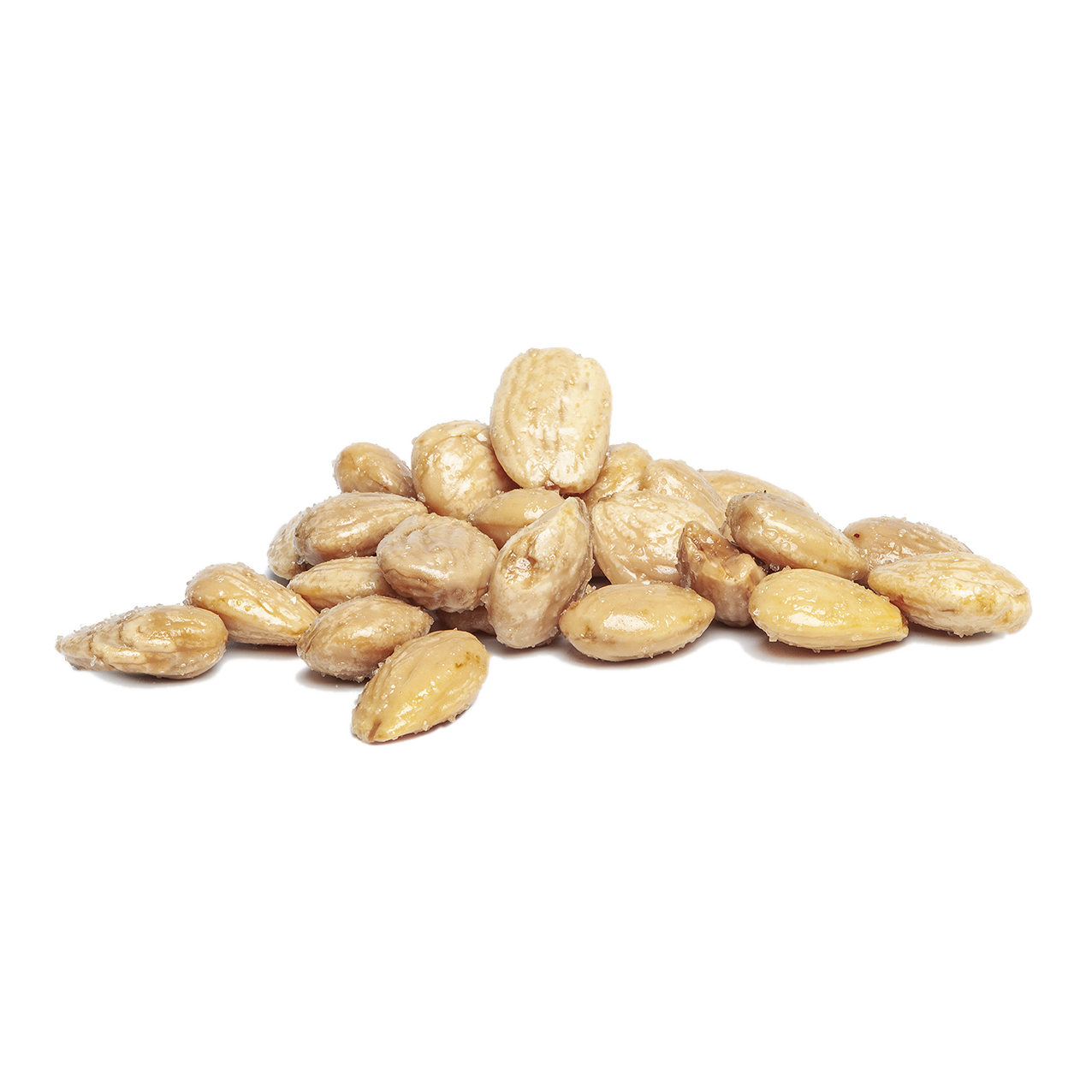
For a distinctly Spanish option, Marcona almonds are particularly interesting.
Their rounded shape, delicate sweetness and buttery character make them well suited to a board where the almonds are being enjoyed as an ingredient in their own right rather than disappearing into a recipe.
Place them in a small pile or shallow bowl near the cheese.
The idea is to make it easy to try combinations such as:
cheese + almond
dried fig + almond
cheese + dried fig + almond
A small number of ingredients has already created several different bites.
4. Add a Mediterranean fruit cake
This is where a Mediterranean cheese board can become more distinctive.
Fruit cake in this context does not necessarily mean a conventional baked dessert.
Spanish dried fruit cakes are compact combinations of dried fruit, nuts and other Mediterranean ingredients designed to be sliced into small portions.
A classic fig and almond cake adds two useful elements at once.
The figs contribute concentrated sweetness and a soft, dense texture.
The almonds provide crunch.
Cut the cake into thin slices rather than large wedges and place it close to one or two cheeses.
This encourages guests to eat them together rather than viewing the fruit cake purely as dessert.
It also creates an alternative to the more familiar combination of cheese and jam.
5. Choose charcuterie carefully
Cured meats are optional, but they can add another savoury dimension.
For a Spanish or Mediterranean-inspired board, you might include:
- jamón
- chorizo
- salchichón
- another regional cured meat
You do not need a large selection.
One or two varieties are usually enough.
If the board already includes several strong cheeses, choose charcuterie that complements rather than overwhelms them.
Presentation can remain simple.
Fold larger slices loosely rather than placing them completely flat. Smaller cured meats can be arranged in short rows or clusters.
The purpose is not only decoration.
Leaving some air between the pieces also makes them easier to pick up.
6. Add olives
Few ingredients make a board feel Mediterranean as quickly as olives.
They contribute saltiness, acidity and a firm texture that contrasts with cheese and dried fruit.
Green olives can introduce fresher, brighter flavours.
Darker olives often provide a deeper, richer character.
You can use one variety or offer two contrasting styles.
Because olives can contain liquid or oil, placing them in a small bowl is often more practical than putting them directly beside crackers or bread.
Their salty profile also makes them particularly useful after sweeter ingredients such as dried figs or fruit cake.
7. Introduce another style of almond
There is no rule saying a cheese board needs only one type of nut.
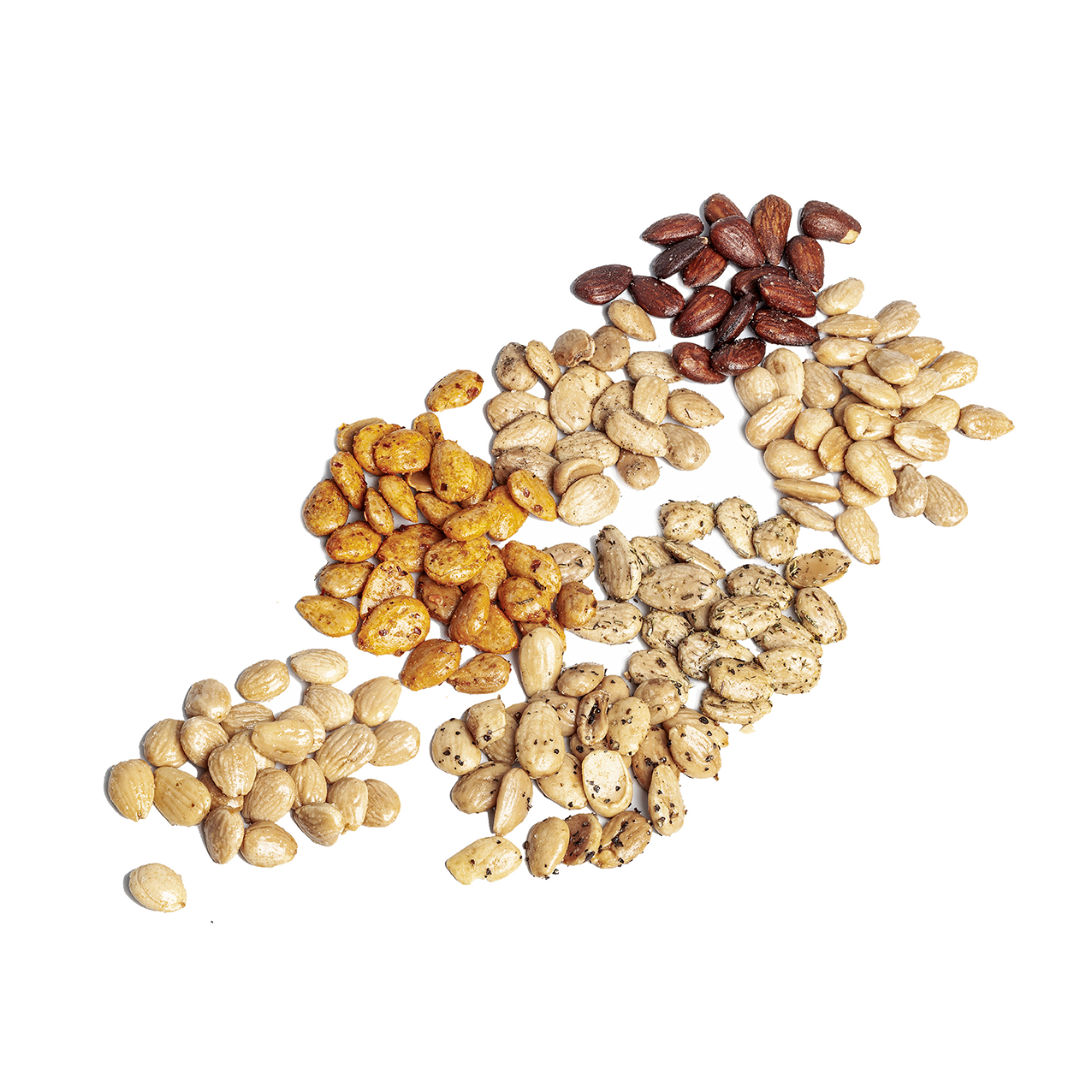
In fact, serving two Spanish almond styles can create another small tasting experience within the board.
While Marcona provides a softer, more delicate almond profile, Valencia almonds can introduce a firmer crunch and different seasoning possibilities.
The contrast can be particularly interesting on a larger board.
Instead of placing both together, position them in different areas.
Guests will naturally begin comparing them with different cheeses and accompaniments.
A seasoned almond may work beside a mild cheese, while a more delicate almond can remain noticeable alongside something mature.
Again, experimentation is part of the experience.
8. Choose bread and crackers that do not compete
Bread and crackers have an important supporting role.
They provide a base for cheese, fruit cake and condiments, but they do not necessarily need to become the strongest flavour on the board.
Useful options include:
- rustic bread
- thin toasted bread
- breadsticks
- neutral crackers
- seeded crackers
Offering two textures is usually more interesting than filling the board with many different varieties.
For example, use rustic bread for softer cheese and crisp crackers for firmer cheese.
Keep highly seasoned crackers to a minimum if the board already contains flavoured almonds, cured meats and strong cheeses.
Too many competing seasonings can make it difficult to appreciate the individual ingredients.
9. Add a condiment
A small condiment can connect several elements of the board.
Fruit-based condiments are especially useful because their sweetness and acidity can complement cheese and savoury ingredients at the same time.
A fig condiment with balsamic vinegar and sweet wine reduction creates one possible bridge between figs, cheese and charcuterie.
Serve condiments in a small bowl with a spoon rather than pouring them directly over the cheese.
This allows everyone to decide which combinations they want to try.
Other possibilities might include:
- honey
- quince paste
- chutney
- fruit preserve
- caramelised onion
One condiment is often enough.
A board already containing dried fruit and fruit cake does not need several additional sources of sweetness.

10. Add something fresh
Dried ingredients benefit from contrast.
A small amount of fresh fruit can lighten the board and add colour.
Good options include:
- grapes
- pear
- apple
- fresh figs when in season
- berries
- citrus segments
Choose whatever looks good and suits the other ingredients.
Fresh fruit does not need to become the centre of the board.
Its purpose is to introduce moisture and freshness between richer bites of cheese, nuts and charcuterie.
How to balance the flavours
A successful Mediterranean cheese board usually includes several basic flavour directions.
Salty
Cheese, olives and cured meats provide most of the saltiness.
Sweet
Dried figs, fruit cake, fresh fruit and condiments provide natural or concentrated sweetness.
Savoury
Mature cheese, charcuterie and nuts create depth.
Acidic
Goat’s cheese, olives, fruit and certain condiments can bring acidity or freshness.
Rich
Creamy cheeses, nuts and charcuterie provide richness.
The aim is not to include equal quantities of everything.
It is to make sure the board does not move entirely in one direction.
If everything is rich and salty, add fruit.
If everything is sweet and mild, introduce mature cheese or olives.
If the board feels too soft, add almonds or crackers.
Building the board becomes much easier once you think in contrasts.
Texture matters just as much as flavour
Cheese boards are sensory experiences.
Flavour is only part of what makes them interesting.
Try to include:
Creamy: soft cheese.
Firm: aged cheese.
Chewy: dried figs or fruit cake.
Crunchy: almonds.
Crisp: crackers or toasted bread.
Tender: charcuterie.
This is why simple boards can be more satisfying than complicated ones.
Six ingredients with genuinely different textures may create more interest than fifteen ingredients that feel similar.
How to arrange a Mediterranean cheese board
Once you have chosen the ingredients, presentation becomes much easier.
Start with the largest elements.
Place the cheeses first
Distribute them around the board rather than putting all three together.
They become the anchors around which everything else is arranged.
Add bowls
Place olives and condiments next.
Because bowls occupy fixed space, it is easier to add them before smaller ingredients.
Position the charcuterie
Create loose groups near cheeses that work well with cured meat.
Add dried fruit and fruit cake
Use these to begin filling some of the spaces between cheeses.
Keep different varieties separate so guests understand what they are tasting.
Add the nuts
Small clusters of almonds can fill smaller gaps while creating texture and visual variation.
Finish with bread, crackers and fresh fruit
These ingredients can occupy the remaining spaces.
The result should look generous without becoming difficult to navigate.
You do not have to fill every centimetre.
A little space can make individual ingredients easier to recognise.
An easy Spanish-inspired cheese board
If you want a straightforward starting point, try this combination:
Cheese
- Manchego
- goat’s cheese
- blue cheese
Fruit and nuts
- dried figs
- Marcona almonds
- thin slices of fig and almond cake
Savoury accompaniments
- jamón
- chorizo
- olives
Bread
- rustic bread
- crisp crackers
Finish
- one fruit-based condiment
- grapes or sliced pear
This combination gives you firm, creamy and strong cheeses together with sweet, salty, chewy and crunchy accompaniments.
It also gives guests plenty of possible pairings without creating an unnecessarily complicated board.
A vegetarian Mediterranean cheese board
Charcuterie is not essential.
Remove the cured meats and concentrate instead on cheese, fruit, nuts and vegetables.
A vegetarian board might contain:
- three contrasting cheeses
- dried figs
- fruit cake
- Marcona or Valencia almonds
- olives
- grilled or marinated vegetables
- grapes or pear
- bread and crackers
- a fruit condiment
Roasted peppers, artichokes or other Mediterranean vegetables can provide an additional savoury element.
The same principle still applies.
Build contrast rather than simply adding more ingredients.
How much variety do you really need?
More is not automatically better.
For a simple gathering, a useful structure is:
- 3 cheeses
- 1–2 dried or fresh fruits
- 1–2 nut options
- 1 fruit cake
- 1–2 cured meats
- olives
- bread or crackers
- 1 condiment
You can scale the quantities according to the number of guests without dramatically increasing the number of different foods.
This helps maintain a clear identity.
It also allows guests to understand what they are eating instead of being faced with dozens of similar choices.
Should everything on the board be Spanish?
Not necessarily.
A Mediterranean cheese board is a useful theme rather than a strict geographical rulebook.
Spanish ingredients provide an excellent foundation, but cheeses and accompaniments from elsewhere around the Mediterranean — or foods that simply complement those flavours — can also work.
The important thing is coherence.
Manchego, figs, almonds and jamón already establish a strong Spanish character.
A creamy cheese from somewhere else does not suddenly make the board stop working.
Choose ingredients because of the flavour and texture they contribute.
Cheese board or charcuterie board: what’s the difference?
The terms are often used interchangeably in casual conversation, but the emphasis is slightly different.
A cheese board places cheese at the centre.
Charcuterie traditionally refers more specifically to prepared and cured meats.
When both appear together alongside fruit, nuts, olives and bread, the result could reasonably be described as either a cheese and charcuterie board or a Mediterranean grazing board.
The name matters less than the balance of the ingredients.
Can you prepare a Mediterranean cheese board in advance?
Many elements can be organised beforehand.
Dried fruit, almonds, fruit cake, crackers and bowls can all be planned in advance.
However, certain ingredients benefit from being added closer to serving.
Freshly sliced fruit can dry out or oxidise.
Bread may lose texture.
Cheese should also be stored appropriately until required.
A practical approach is to prepare the individual components first and assemble the board closer to the moment it will be served.
This keeps preparation simple without compromising the ingredients.
Don’t forget the combinations
A Mediterranean cheese board becomes more interesting when guests understand that the ingredients are designed to be eaten together.
You might start with:
Manchego + dried fig
Then try:
goat’s cheese + fruit cake
Or:
blue cheese + fig condiment
Then:
Manchego + Marcona almond
Or simply:
dried fig + almond
There are no strict rules.
The board provides a collection of flavours and textures and allows everyone to create their own combinations.
If you want to explore this idea in more detail, our Spanish Fig Cake & Cheese Pairing Guide looks specifically at how different styles of fruit cake work with Manchego, goat’s cheese, blue cheese and other varieties.
The secret is contrast, not quantity
Building a Mediterranean cheese board does not have to be complicated.
Start with three cheeses that offer genuinely different experiences.
Then introduce contrast.
Add something sweet.
Something crunchy.
Something salty.
Something fresh.
Include bread or crackers to bring individual bites together, and use one carefully chosen condiment if the board needs another flavour dimension.
Mediterranean ingredients make this particularly natural because figs, almonds, cheese, olives, cured meats and fruit cakes already complement one another in so many different ways.
The result should not feel like a collection of unrelated snacks.
It should invite people to try one ingredient with another, discover new combinations and return to the ones they enjoy most.
Discover Mediterranean dried fruit cakes
Dried fruit cake is one of the easiest ways to add natural sweetness, texture and Mediterranean character to a cheese board.
From traditional combinations of figs and almonds to recipes incorporating citrus, dates, apricots, walnuts or dark chocolate, different fruit cakes can create completely different pairings with cheese.
Serve them in thin slices alongside mature, creamy or blue cheeses, combine them with Spanish almonds and charcuterie, or make them one of the central tasting elements of a Mediterranean sharing board.