
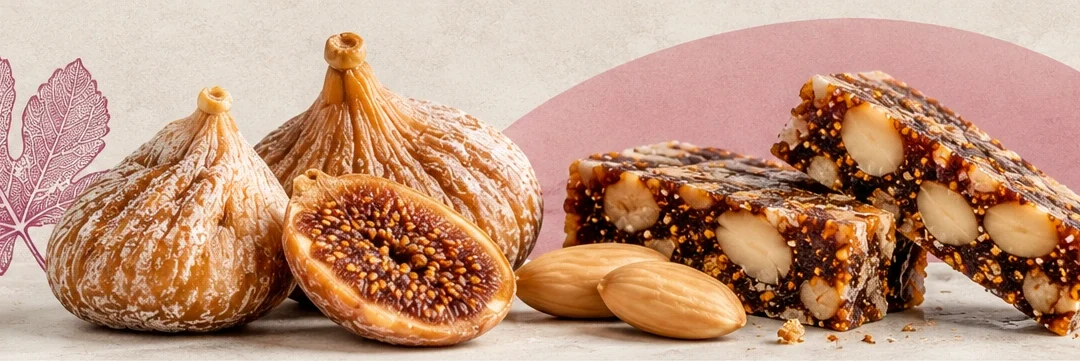
A dried fig is already a remarkably versatile ingredient. It can be eaten straight from the pack, chopped into a recipe or served beside a piece of mature cheese.
But in Spain, dried figs are also the starting point for something quite different: fig cake.
Known traditionally as pan de higo, Spanish fig cake takes the concentrated flavour of dried figs and turns it into a compact, sliceable speciality. Depending on the recipe, almonds, citrus, other dried fruits or even chocolate can add new flavours and textures.
The two products share a common ingredient, yet they are not quite interchangeable.
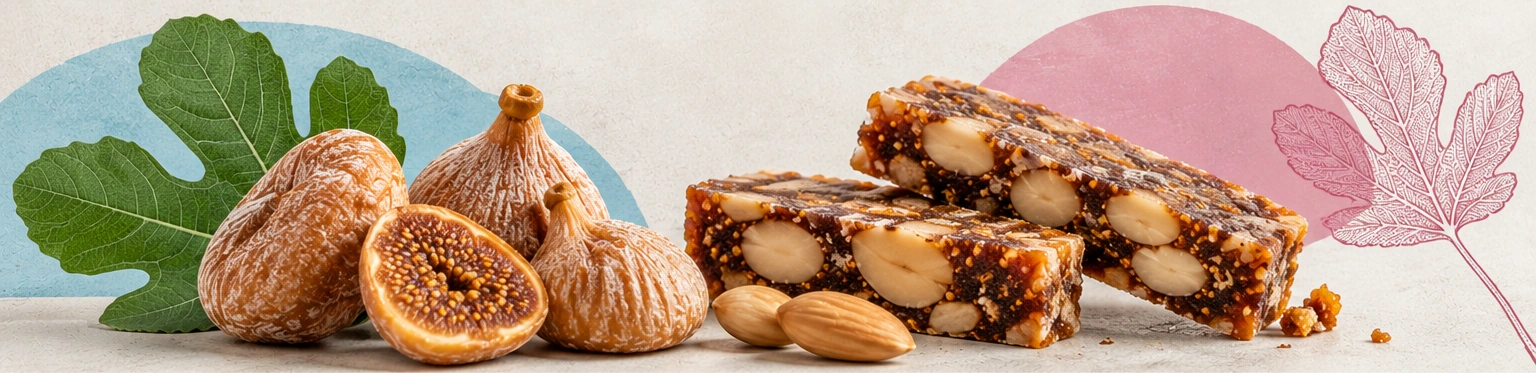
Whole dried figs preserve the individual character of the fruit. Fig cake offers a prepared combination of ingredients in a form that can be sliced, portioned and paired with other foods.
So what changes between the two, and when should you choose one over the other?
This guide looks at how dried figs become fig cake, the differences in ingredients, flavour and texture, and the best ways to enjoy each.
Dried figs vs fig cake at a glance
| Characteristic | Dried figs | Spanish fig cake |
| Main ingredient | Whole dried figs | Dried figs formed into a compact cake |
| Additional ingredients | May contain only figs; some styles use a light coating | Often includes almonds or other fruits, nuts and flavourings |
| Texture | Soft, dense and chewy, with tiny seeds | Dense and sliceable; texture varies with the recipe |
| Flavour | Concentrated fig sweetness | Fig sweetness combined with nutty, citrus, chocolate or other notes |
| Presentation | Individual whole fruits | A pressed cake, round, bar or roll that is cut into portions |
| Typical uses | Snacking, cooking, baking and cheese boards | Cheese pairings, sharing platters, snacks and gourmet selections |
| Preparation before serving | Usually none | Usually sliced into thin pieces |
| Best reason to choose it | You want the fruit itself | You want a ready-made combination of complementary ingredients |
The important distinction is not that one is necessarily sweeter, healthier or more traditional. It is that dried figs are an ingredient in their own right, while fig cake is a prepared food made from them.
What are dried figs?
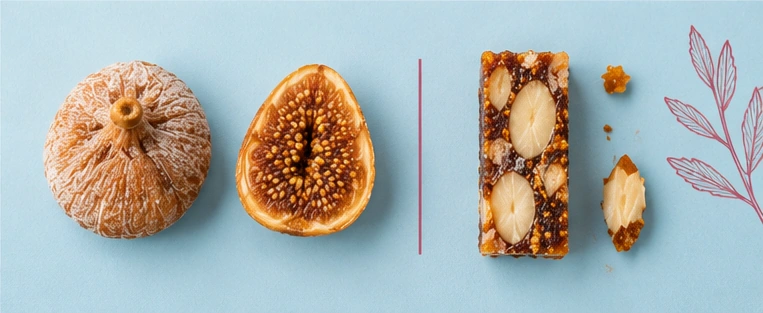
Dried figs are figs from which much of the natural moisture has been removed.
As the fruit dries, it becomes smaller and denser. Its flesh takes on a chewy consistency, and the flavours already present in the fig become more concentrated. The tiny edible seeds remain, adding a delicate crunch.
Good dried figs should still be pleasant to bite into rather than excessively hard. Their exact texture depends on the variety of fig, its ripeness and the drying and storage conditions.
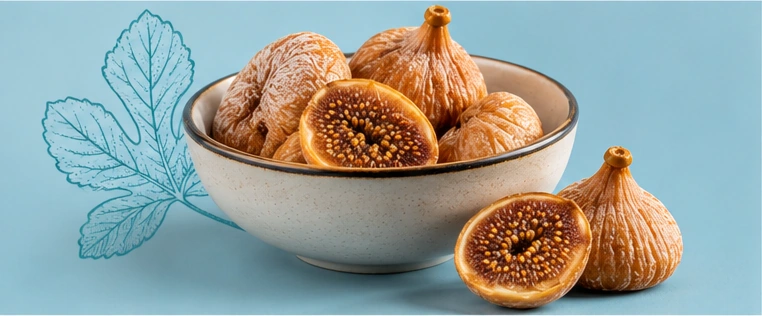
At Think Mediterranean, our Spanish dried figs are selected in Extremadura, Spain, and naturally sun-dried. The range includes whole dried figs and a version lightly dusted with rice flour for a less sticky finish.
Whole dried figs are especially convenient because they need very little preparation. Serve them with cheese, carry a few as a snack or chop them into a savoury dish.
If you would first like to understand what drying changes in the fruit itself, our guide to dried figs vs fresh figs compares their flavour, texture, seasonality and culinary uses.
What is Spanish fig cake?
Spanish fig cake is a compact dried-fruit speciality made primarily from figs, often combined with nuts or other ingredients.
It is commonly known as pan de higo, literally “fig bread”. Despite the name, it is not usually a loaf of bread, and it is different from a conventional flour-based sponge cake.
Traditional-style Spanish fig cakes are made by combining prepared dried figs with other ingredients and pressing the mixture into a firm shape. The fruit itself provides much of the sweetness and body.
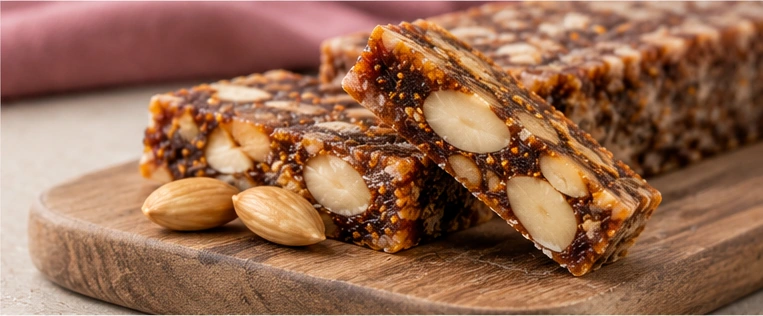
One of the best-known combinations is fig and almond cake.
The figs contribute a soft, dense texture and mellow sweetness. Almonds provide a firmer bite and a nutty contrast. The finished cake can be cut into slices and placed next to cheese, charcuterie or other Mediterranean accompaniments.
Think Mediterranean’s Spanish fig cakes include traditional fig-and-almond combinations as well as recipes featuring orange, chocolate and jalapeño chilli. They sit within the wider family of Mediterranean dried fruit cakes, which also includes recipes based on dates or apricots.
A fig cake is therefore more than a different shape for dried figs. It is a way of bringing several flavours together in one prepared portion.
How are dried figs turned into fig cake?
The transformation is relatively simple in principle, although individual producers and recipes use different techniques.
1. The dried figs are selected and prepared
Dried figs form the foundation of the cake.
Depending on the recipe, they may be trimmed, chopped or worked into a mixture that can hold its shape. The fruit’s natural moisture and soft, dense consistency help bring the ingredients together.
2. Other ingredients are added
This is where fig cake begins to develop a distinct identity.
Almonds are a traditional partner, but recipes may also include orange zest, dates, apricots, dark chocolate or spices.
Each ingredient changes the result. Nuts create crunch. Citrus introduces brighter notes. Dark chocolate adds a deeper flavour, while chilli can create a sweet-and-spicy contrast.
3. The mixture is shaped and pressed
Rather than relying on a light baked crumb, the prepared fruit mixture is formed into a compact cake or roll.
Pressing gives it a cohesive structure that can be portioned with a knife. Pieces of nuts or other ingredients remain visible in the slice, making the cake quite different from a whole dried fig.
4. The finished cake is sliced and served
A thin slice is usually all that is needed to add fruit, sweetness and texture to a cheese plate.
This is one of fig cake’s practical advantages: it provides a prepared combination in a format that is easy to present and share.
1. Ingredients: one fruit or a combination of flavours
The clearest difference is in the ingredients.
A pack of plain dried figs can contain just figs. Some versions are lightly dusted with rice flour, and other products may be prepared differently, so it is always worth reading the label.
Fig cake starts with dried figs but commonly brings other ingredients into the picture.
A traditional fig and almond cake combines fruit with nuts. Other recipes can include additional dried fruits, citrus or chocolate.
That variety makes fig cake appealing when you want more than the flavour of the fig alone. On the other hand, whole dried figs give you greater freedom to decide what to add yourself.
For example, you can serve a dried fig with a handful of almonds, or you can serve a slice of fig-and-almond cake in which those flavours have already been brought together.
Neither approach is better. They simply offer different levels of preparation and choice.
2. Texture: individual chewiness or a sliceable cake
Bite into a whole dried fig and you experience the fruit’s chewy flesh and tiny seeds together.
Each fig has its own shape and consistency. Some feel particularly soft; others offer more resistance.
Fig cake has a more unified texture because the ingredients have been prepared and pressed together. It is usually dense, but not necessarily uniform.
In a fig and almond cake, a soft fruit base contrasts with pieces of crunchy almond. A cake containing several dried fruits may be more varied, while one with chocolate will have a different finish again.
This also affects serving.
Whole figs can be eaten by hand or cut into pieces. Fig cake is generally better sliced into small portions, particularly when used alongside cheese.
3. Flavour: the fig itself or a layered combination
Dried figs have their own concentrated sweetness, sometimes with honeyed or caramel-like notes depending on the fruit.
Because they are served whole, those fig flavours remain the focus.
Fig cake keeps that foundation but can introduce several other flavour directions.
Almonds add nuttiness. Orange brings a brighter, more aromatic character. Dark chocolate adds richness and a slight bitterness that can balance the fruit. Jalapeño introduces a contrasting warmth.
The result is not automatically sweeter than a dried fig. That depends on the recipe and proportions.
A classic fig-and-almond cake may feel balanced by the nuts, while a chocolate variation offers a richer experience. The most useful way to compare them is by flavour profile, not by assuming that every cake tastes the same.
4. Presentation: whole fruit or ready-to-share portions
Presentation may sound like a small detail, but it matters when serving other people.
Whole dried figs have a natural, rustic appearance. They look at home in a small bowl, beside nuts or scattered thoughtfully around a sharing board.
Fig cake creates a different impression.
Thin slices can be arranged in a row or fan, placed directly next to a cheese or portioned consistently for a tasting plate. A slice also makes the individual ingredients easier to see.
For a simple family snack, that distinction may not matter very much. For a delicatessen display, cheese counter, catering event or gourmet hamper, the way the product is presented can be part of its appeal.
5. Versatility: a flexible ingredient or a prepared speciality
Dried figs are particularly useful when you want control over a recipe.
They can be chopped into salads, added to stuffings, used in baking or paired with ingredients chosen for the occasion. If a softer consistency is needed, they can sometimes be soaked before being incorporated into a dish.
Fig cake arrives with a flavour combination already established.
You can still use it creatively, but its greatest strength is often convenience. Slice it and serve it with cheese, charcuterie, coffee or tea. It requires little preparation while offering more than one flavour in each bite.
If you are cooking a dish that calls specifically for chopped dried figs, whole figs will usually give you more flexibility. If you want an elegant addition to a cheese board without assembling several separate ingredients, fig cake may be the easier choice.
6. Nutrition and allergens: why the recipe matters
Both dried figs and fig cake can contain fibre, naturally occurring sugars and minerals associated with dried fruit.
However, it would be misleading to assume their nutritional values are identical.
A plain dried fig is primarily the fruit itself. Fig cake may also contain nuts, chocolate or other dried fruits, all of which affect its nutritional composition.
The proportions also matter. Comparing a few whole figs with one large slice of cake does not tell you much unless the serving sizes are considered.
There is another practical difference: allergens.
Many fig cakes contain almonds or other nuts, whereas plain dried figs do not normally include those ingredients. Always check the actual product label, particularly when serving guests or buying for hospitality and retail.
And while the sweetness in both products may come largely from dried fruit, never assume that every fig cake or dried-fruit product has the same ingredient list or contains no added sugar.
Not all fig cakes taste the same
One of the most interesting aspects of Spanish fig cake is how many variations can come from the same basic ingredient.
Fig and almond cake: the traditional combination
The classic pairing brings together the softness of dried figs and the crunch of almonds.
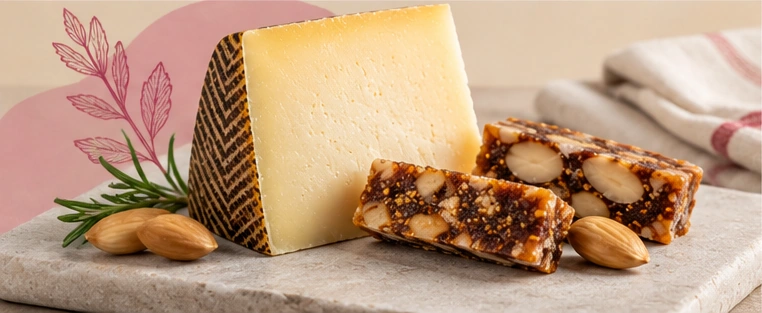
Think Mediterranean’s Fig & Almond Cakes use Spanish Calabacita figs from Extremadura and almonds from Valencia. Their traditional Fig and Almond Cake is a good example of how a simple combination creates a sliceable speciality that works particularly well beside mature cheese.
Fig and orange cake: a brighter flavour
Orange introduces a fragrant citrus note that lifts the deeper sweetness of the figs.
In Think Mediterranean’s version, figs and almonds are combined with orange, dates and apricots. The result has more than one fruit character without losing its fig-based identity.
Fig cake with dark chocolate: richer and more intense
Chocolate adds a different dimension.
Its cocoa notes contrast with the fruit’s sweetness, creating a combination suited to coffee, tea or an after-dinner tasting. Some chocolate varieties also work alongside stronger cheeses.
Fig and orange cake with jalapeños: sweet and savoury contrast
A chilli variation may seem surprising, but the idea is straightforward: natural fruit sweetness, citrus and a measured spicy finish.
A thin slice can work particularly well with mature cheese, where the saltiness and savoury flavour provide another point of contrast.
These variations show why the term “fig cake” describes a family of preparations rather than a single fixed recipe.
Dried figs or fig cake for a cheese board?
Both are excellent options, but they play slightly different roles.
Choose whole dried figs when you want to offer the fruit separately and let guests create their own combinations.
Try serving them with:
- Manchego or another mature sheep’s-milk cheese
- goat’s cheese
- blue cheese
- Spanish almonds
- olives and charcuterie
A dried fig can be enjoyed on its own, followed by cheese or a nut. The flavours remain separate until the moment they are eaten together.
Choose fig cake when you want a slice that already combines figs with other ingredients.
A classic fig and almond cake works particularly well with Manchego or mature Gouda. A fig-and-orange variation can bring brightness to a stronger cheese, while a chocolate version creates a more distinctive after-dinner option.
For a board that offers both experiences, try this simple arrangement:
- Place a firm cheese and a creamy cheese on the board.
- Add a few whole dried figs beside one of them.
- Arrange thin slices of fig-and-almond cake near the other.
- Finish with almonds, olives and neutral crackers.
Guests can then compare the whole fruit with the prepared cake without needing a large number of ingredients.
For more detailed cheese combinations, see our Spanish Fig Cake & Cheese Pairing Guide. If you are planning the complete presentation, How to Build a Mediterranean Cheese Board explains how to balance cheeses, dried fruit, nuts and accompaniments.
Which is better for snacking, cooking or gifting?
The easiest way to choose is to think about what you need the product to do.
For an everyday snack
Whole dried figs are hard to beat for simplicity. They can be enjoyed directly, with no slicing or preparation.
Fig cake is another convenient option, especially if you enjoy the contrast between fruit and nuts. A pre-cut portion can provide a more varied flavour in one bite.
For cooking and baking
Whole dried figs are usually the more adaptable ingredient.
You can chop them to the size required, soak them when appropriate or combine them with other ingredients according to the recipe.
Fig cake can be used in selected dishes or chopped as a topping, but remember that it already includes additional ingredients that will affect the final flavour and texture.
For entertaining and gifting
Fig cake often has the advantage of an immediately presentable format. A compact cake can be sliced for a tasting or included in a gourmet selection alongside cheese and other Mediterranean foods.
Whole dried figs also work well in gift hampers, particularly when paired with nuts or a complementary cheese.
For professional buyers, the decision may depend on portioning, ingredient lists, packaging and the type of display or service being planned, rather than on flavour alone.
How should dried figs and fig cake be stored?
Drying makes figs more practical to store than fresh fruit, but that does not mean every dried-fig product should be handled identically.
Whole figs and pressed fig cakes can differ in moisture, ingredients, packaging and storage recommendations.
Always follow the instructions on the individual pack, including any advice for storage after opening.
For serving, a few simple habits help:
- Keep products protected from excess moisture and unwanted odours.
- Use a clean, dry knife when slicing fig cake.
- Cut only what you need for the occasion if you want to keep the remaining cake neatly presented.
- Check ingredient and allergen information before serving a mixed group.
There is no need to assume fig cake has a longer shelf life simply because it has been pressed into a different shape. Packaging and the specific recipe are more useful guides.
Frequently asked questions about dried figs and fig cake
Is fig cake made from dried figs?
Yes. Traditional-style Spanish fig cake uses dried figs as its main ingredient, usually combined with almonds or other complementary ingredients. The prepared mixture is shaped and pressed into a compact, sliceable form.
Is Spanish fig cake the same as pan de higo?
In this context, yes. Pan de higo is the traditional Spanish name used for pressed dried-fig cake. Recipes vary, but figs and almonds are a particularly familiar combination.
Does fig cake have to be baked?
Not necessarily. The traditional pressed Spanish fig cake discussed here is different from a conventional flour-based cake. Its firm structure comes from prepared dried fruit being combined and pressed, rather than from a light sponge crumb.
Is fig cake healthier than dried figs?
Neither is automatically healthier. The answer depends on the fig cake’s ingredients, the portion size and your individual dietary needs. Compare product labels rather than assuming that either format has a universal nutritional advantage.
Can I use fig cake instead of whole dried figs in a recipe?
Sometimes, but not as a direct substitute in every dish. Fig cake may contain nuts, chocolate, citrus or other fruits, and its pressed texture behaves differently from whole figs. Use whole dried figs when a recipe depends on the fruit’s individual shape or when you need precise control over additional ingredients.
Which is better with cheese: dried figs or fig cake?
Choose dried figs if you want the natural flavour of the fruit and freedom to experiment. Choose fig cake if you want a prepared combination, such as figs and almonds, that can be served in thin slices. Both work particularly well with mature and creamy cheeses.
Discover the versatility of Spanish figs
Whole dried figs and Spanish fig cake are closely connected, but each brings something different to the table.
Dried figs offer the fruit’s concentrated sweetness and chewy texture in a simple, versatile form. Fig cake takes that foundation and creates a compact speciality in which almonds, citrus, chocolate or other ingredients can introduce new flavours and textures.
You do not have to choose one permanently over the other.
Serve whole figs as an everyday snack or a flexible ingredient for cooking. Choose thin slices of fig cake when you want an easy accompaniment for cheese, a gourmet sharing board or an after-dinner selection.
At Think Mediterranean, our naturally sun-dried figs come from Extremadura, while our pressed Mediterranean fruit cakes showcase combinations that bring out different sides of dried fruit.
Discover our Spanish Dried Figs or explore our Mediterranean Dried Fruit Cakes to find the format that best suits the occasion.