
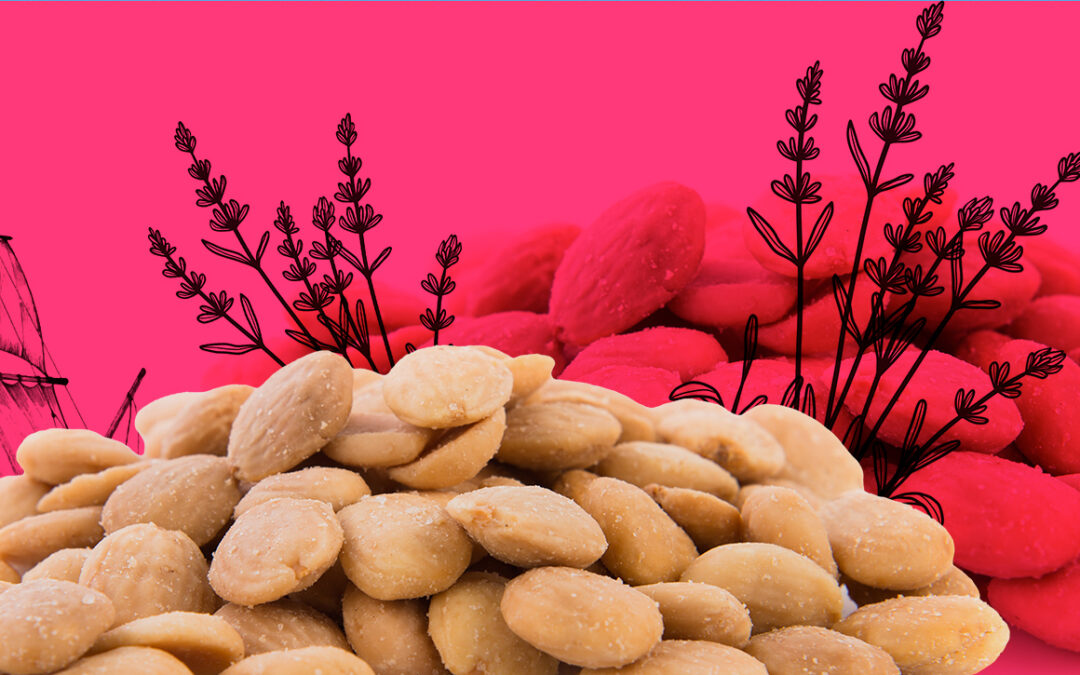
A handful of Marcona almonds can change the way a cheese tastes.
Beside a firm, mature cheese, they bring a gentle sweetness that softens the savoury edges. Next to something creamy, they add a satisfying bite. With a sharper cheese, their richer, rounded flavour can provide a welcome contrast without demanding attention of its own.
That versatility is what makes this Spanish almond variety so useful for cheese pairings.
The secret is not simply to put almonds next to cheese. It is to consider the flavour, texture and intensity of both ingredients — and then decide whether you want them to complement or contrast with each other.
So which cheeses work best with Marcona almonds?
This guide explores combinations worth trying, explains why they work and shows how to serve them for an aperitif, a tasting or a Mediterranean cheese board.
Marcona almonds and cheese: the best pairings at a glance
| Cheese | Flavour and texture | Why it works with Marcona almonds | Try it with |
| Manchego | Firm, savoury and often nutty | The flavours echo one another without becoming identical | Dried fig or quince paste |
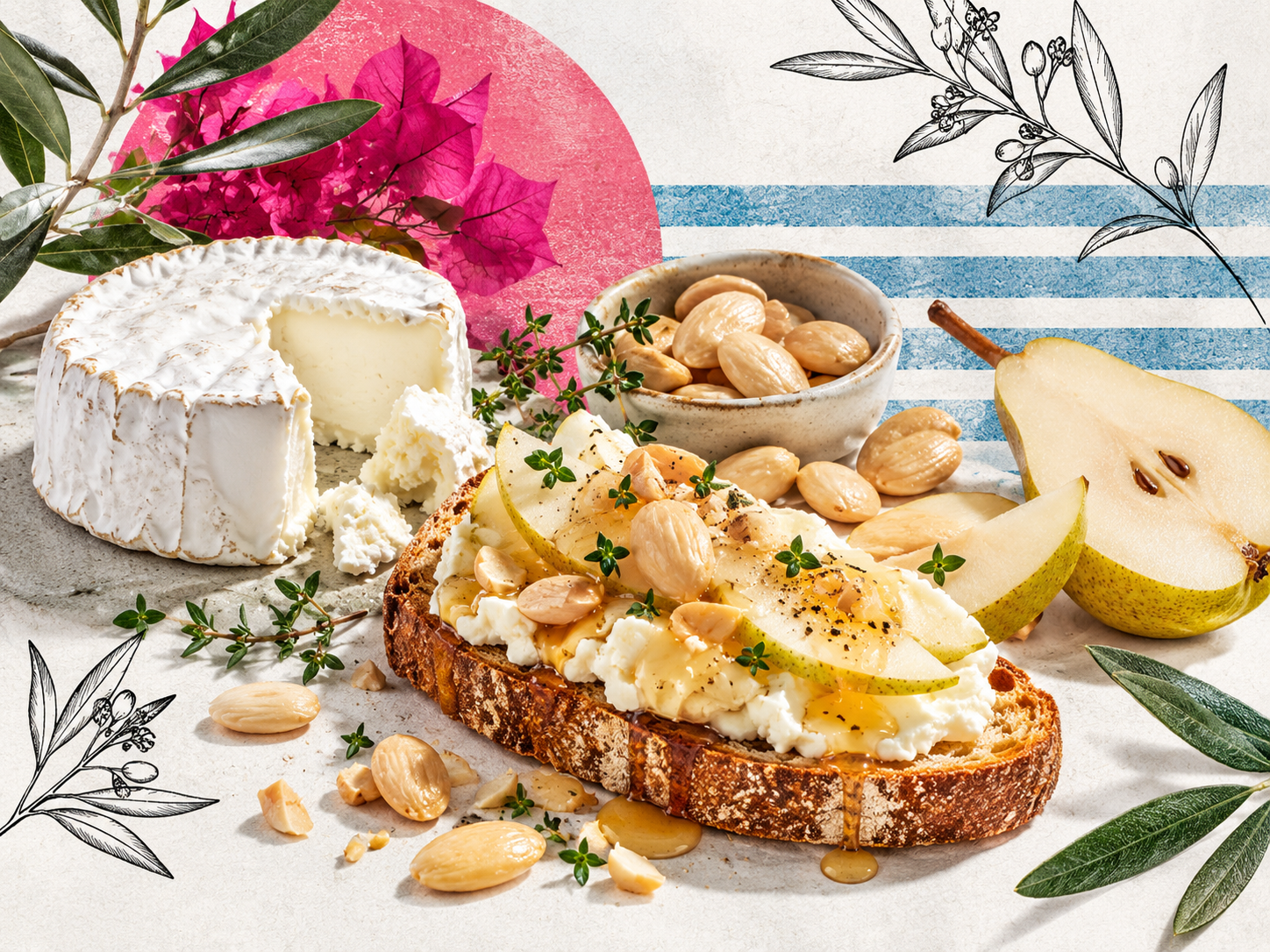
| Fresh goat’s cheese | Creamy, tangy and fresh | The almonds add texture and soften the impression of acidity | Pear or a little honey |
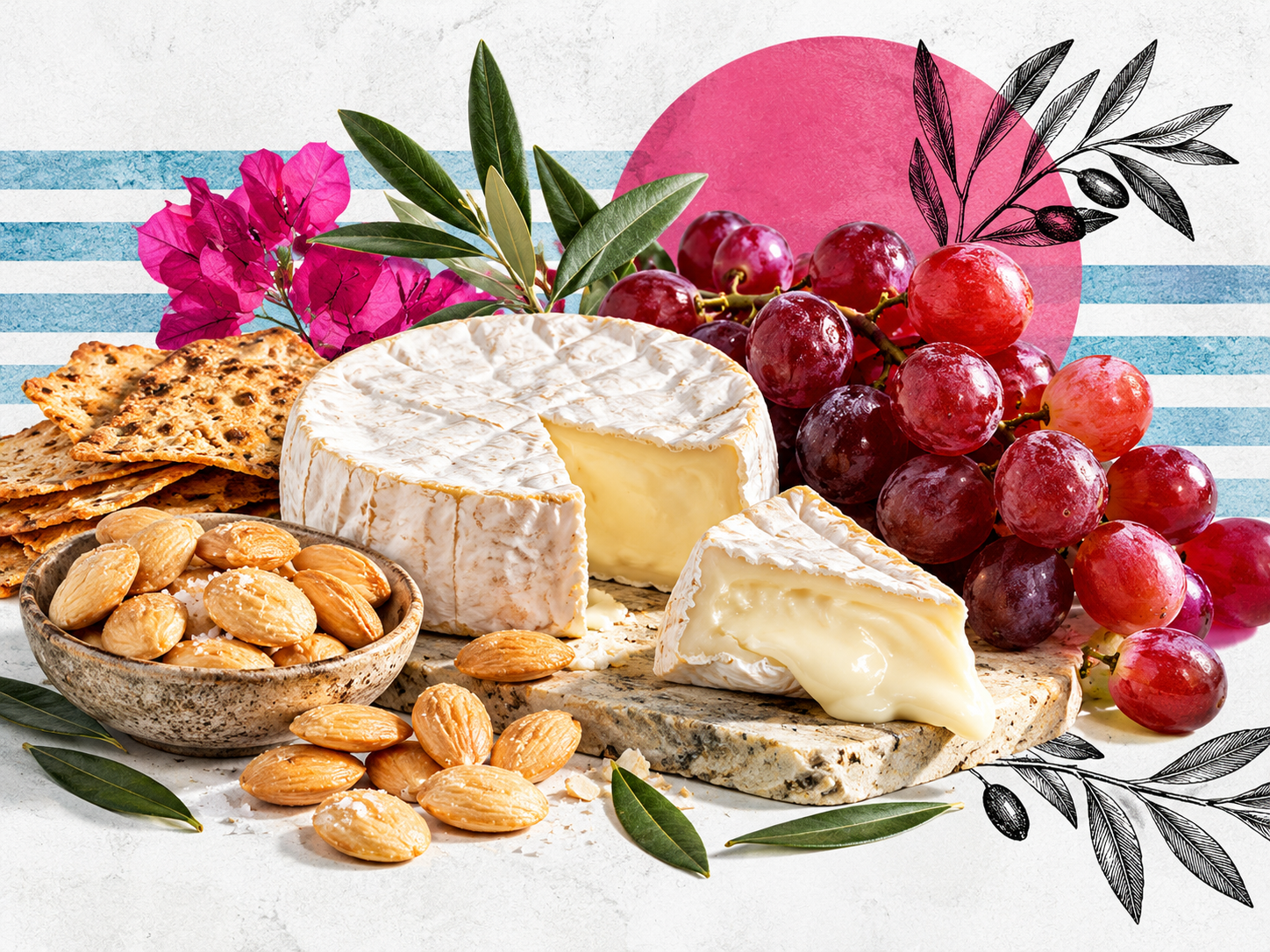
| Brie or similar soft-ripened cheese | Soft, rich and buttery | A gentle crunch contrasts with the creamy centre | Fresh grapes |
| Comté or mature Gouda | Firm, complex and sweet-savoury | The almonds pick up roasted and nutty notes in the cheese | Thin crackers or apple |
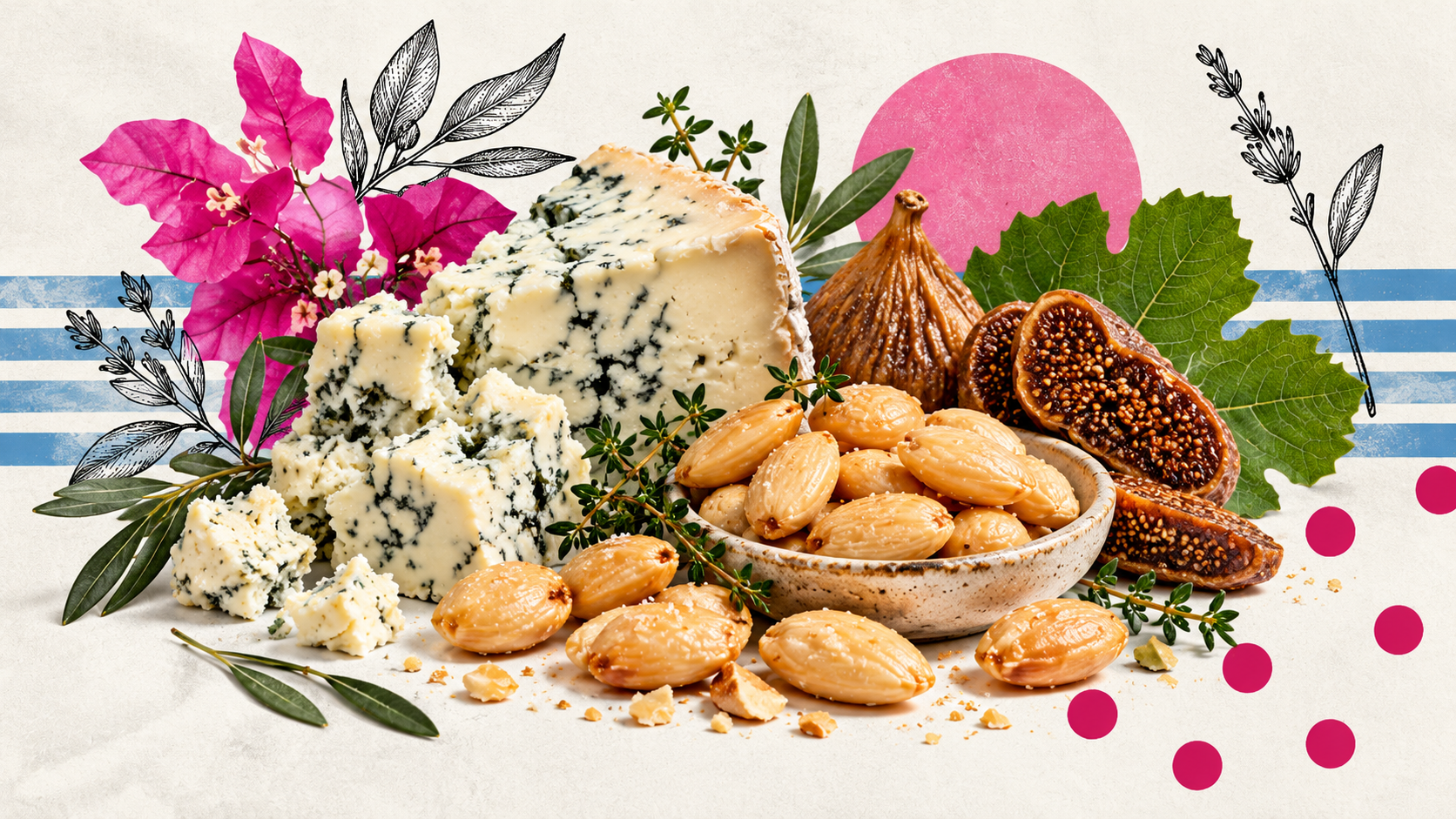
| Blue cheese | Salty, pungent and creamy | Mild almond flavour gives contrast without adding more intensity | Dried figs or fig cake |
| Idiazabal or another mature sheep’s cheese | Firm, distinctive and sometimes smoky | The almonds round out robust sheep’s-milk flavours | Olives or rustic bread |
These are starting points, not strict rules. The age of the cheese, the way the almonds are prepared and the accompaniments on the plate can all change the result.
Why Marcona almonds pair so well with cheese
Marcona almonds are different from many of the elongated almond varieties commonly used for everyday snacking and baking.
They are shorter and rounder, with a more delicate flavour and a naturally tender, almost buttery character. They still provide a pleasant bite, particularly when fried, but the texture is less aggressively hard than that of some conventional almonds.
At Think Mediterranean, our Spanish Marcona almonds are fried and lightly salted. That preparation matters in a cheese pairing: a little salt brings the almond’s flavour forward, while the gentle crunch gives a different sensation from the cheese itself.
Three characteristics make them especially useful.
A restrained flavour. Marcona almonds have enough personality to be enjoyed alone, but they do not normally overwhelm a mild cheese.
A tender crunch. Creamy cheeses become more interesting when followed by something with bite. With firm cheeses, the almond offers a different kind of texture rather than simply more hardness.
A naturally rounded sweetness. This can balance tangy goat’s cheese, complement nutty aged varieties or provide a softer counterpoint to salty blue cheese.
If you are interested in how the variety compares with more conventional almonds, our guide to Marcona almonds vs regular almonds looks at the differences in shape, texture, flavour and use.
How to choose a cheese pairing
Before focusing on individual varieties, it helps to understand what you want the combination to achieve.
Match the intensity
A mild cheese usually benefits from a delicate accompaniment. Fresh goat’s cheese and young, creamy cheeses can be paired with Marcona almonds without either ingredient dominating.
As cheeses become older and more savoury, the pairing changes. The almond may no longer be the strongest flavour, but its texture and subtle sweetness remain noticeable.
With particularly intense blue or smoked cheeses, a third element — such as dried fruit — can make the combination more balanced.
Think about texture
Ask what the cheese already provides.
If it is soft and spreadable, serve the almonds whole on the side or roughly chopped over a small portion. If it is hard and crumbly, offer the almonds separately so each can be tasted clearly before being combined.
There is no need to crush every almond into a topping. Their rounded shape is part of their appeal, especially on a shared board.
Taste the ingredients together, not just separately
A simple test reveals more than a long set of pairing rules.
Taste a little cheese on its own, then one almond, then the two together. Notice whether the almond brings out a nutty note, reduces the impression of sharpness or adds a welcome change in texture.
If the combination feels too rich, add fresh fruit. If a strong cheese overwhelms the almond, try a small piece of dried fig between bites.
1. Marcona almonds with Manchego: the classic Spanish pairing
Manchego is an obvious place to begin, and with good reason.
Made from sheep’s milk in La Mancha, it offers a firm texture and flavours that become more pronounced as the cheese matures. Depending on its age, Manchego may taste relatively mild and creamy or develop deeper savoury, tangy and nutty notes.
Marcona almonds sit naturally alongside those flavours.
The almond’s richness complements the cheese without making the combination excessively sweet, while the lightly salted exterior fits comfortably with Manchego’s savoury profile.
The age of the cheese makes a difference.
- Younger or semi-cured Manchego: try a simple pairing of cheese and almonds, without additional sweetness. The gentler cheese allows the Marcona flavour to remain prominent.
- Mature Manchego: add a small piece of dried fig or quince paste. A little concentrated fruit sweetness can soften the more assertive finish of the cheese.
For serving, cut Manchego into manageable wedges and place a small bowl of almonds next to it. Guests can alternate bites or try the two together.
A combination to try: mature Manchego + fried and salted Marcona almonds + a thin slice of dried fig.
It is simple, distinctly Spanish and suitable for almost any aperitif board.
2. Marcona almonds with goat’s cheese: creamy and tangy
Fresh goat’s cheese creates a different experience.
Where Manchego is firm and savoury, a young goat’s cheese is usually softer, brighter and more acidic. That freshness gives Marcona almonds a clear role: they add richness and texture without taking away the cheese’s character.
The pairing is especially appealing when the goat’s cheese is spreadable.
Serve a small portion on a neutral cracker or piece of toasted bread and finish with a few roughly chopped Marcona almonds. The cheese provides creaminess, the bread provides structure and the almonds add a distinctive bite.
A few slices of pear or a very small drizzle of honey can introduce another flavour, but neither is essential.
With a more mature goat’s cheese, taste it first. Some aged varieties have a much stronger flavour than fresh chèvre and may work better with almonds served separately.
A combination to try: fresh goat’s cheese + chopped Marcona almonds + pear.
The result is light enough for an early aperitif but still interesting beside more mature cheeses.
3. Marcona almonds with Brie: contrast in texture
A soft-ripened cheese such as Brie offers another useful pairing opportunity.
Its creamy centre and mild, sometimes mushroomy flavour create a smooth, rich experience. Marcona almonds add definition to that softness.
Rather than hiding the almonds under the cheese, keep them alongside it. A bite of Brie followed by a lightly salted almond makes the contrast easy to appreciate.
If the cheese is particularly rich, grapes or apple slices can provide a fresher interval between bites.
This is also a good example of why a successful Mediterranean-inspired board does not need to contain only Spanish cheeses. The ingredients can come from different traditions as long as the flavours make sense together.
A combination to try: Brie + whole Marcona almonds + green grapes.
For this pairing, neutral crackers work better than strongly flavoured varieties that compete with the mild cheese.
4. Marcona almonds with Comté or mature Gouda: nutty flavours together
Some firm cheeses already contain flavours that seem naturally suited to almonds.
Comté and mature Gouda can develop complex savoury notes, sometimes accompanied by nutty, caramel-like or toasted flavours. The precise character depends on the cheese and how long it has matured.
Here, the objective is less about sharp contrast and more about finding a shared flavour direction.
Marcona almonds reinforce the nutty impression while keeping the pairing pleasantly varied in texture. The cheese may be dense, crystalline or slightly crumbly; the almond provides a separate bite with a softer finish.
Try relatively thin pieces of cheese rather than thick cubes. A smaller portion makes it easier to notice the almond alongside it.
Apple slices can work well if the overall combination feels rich, while plain bread keeps the focus on the cheese and nuts.
A combination to try: mature Gouda + Marcona almonds + crisp apple.
This is particularly suited to guests who enjoy aged cheeses but do not necessarily want very strong blue varieties.
5. Marcona almonds with blue cheese: balance a stronger flavour
Blue cheese is more challenging, but it can be one of the most interesting pairings.
Its saltiness, pungency and creamy texture can easily dominate a delicate almond. For that reason, the proportions matter.
Start with a small amount of blue cheese and a whole Marcona almond. The nut adds a gentler flavour and a contrasting bite, but it will not completely counter the intensity of the cheese.
A third ingredient often helps.
Dried figs provide concentrated sweetness and a chewy texture that links the creaminess of the cheese with the richness of the nut. A thin slice of fig cake can work in a similar way.
Choose the blue cheese according to the experience you want. A relatively mild, creamy blue will make a gentler pairing than a particularly powerful variety such as Cabrales.
A combination to try: mild blue cheese + Marcona almonds + Spanish dried figs.
Keep the fruit portion small enough that the cheese and almond still have room to be noticed.
6. Marcona almonds with Idiazabal: a more robust Spanish option
If you want to explore another Spanish cheese, consider Idiazabal or a comparable mature sheep’s-milk cheese.
Idiazabal is firm and distinctive, and some versions have a smoky character. That makes the pairing different from the more familiar Manchego combination.
The almond’s mild sweetness can soften the overall impression of a robust cheese, while its fried, lightly salted finish fits well with a savoury aperitif.
Keep the accompaniments simple at first. A few olives or a piece of rustic bread may be enough. Too many strongly flavoured additions can make it harder to appreciate the cheese itself.
A combination to try: Idiazabal + Marcona almonds + rustic bread.
If the cheese is smoked, use a smaller portion and taste how the almond responds before adding anything else.
Should you choose salted or unsalted Marcona almonds?
Both can work with cheese, but they create slightly different results.
Unsalted almonds allow the variety’s natural flavour to remain the main focus. They may be useful when a cheese is already very salty or when you want to compare several cheeses carefully.
Lightly salted Marcona almonds are particularly convenient for aperitifs and shared boards. A little salt adds definition and works naturally with many cheeses, especially mild and creamy ones.
The important distinction is between light seasoning and an almond so heavily seasoned that the cheese becomes difficult to taste.
Think Mediterranean’s Marcona almonds are fried and lightly salted, making them ready to serve without additional preparation.
When offering strongly flavoured or very salty cheeses, simply keep the portions modest and use fresh fruit or plain bread to reset the palate.
Five simple Marcona almond and cheese combinations to try
Once you understand the basic pairings, it becomes easier to create variations around them.
- The Spanish classic: Manchego + Marcona almonds + dried fig. Savoury, gently sweet and easy to serve.
- The fresh contrast: goat’s cheese + chopped Marcona almonds + pear. Creamy, tangy and crisp.
- The soft and rich pairing: Brie + whole Marcona almonds + grapes. Gentle flavours with contrasting textures.
- The mature cheese pairing: Comté or aged Gouda + Marcona almonds + apple. Nutty, savoury and fresh.
- The bold combination: blue cheese + Marcona almonds + a thin slice of fig cake. Salty, creamy, chewy and balanced by fruit sweetness.
Try one combination at a time before presenting several together. It helps you identify what each ingredient contributes rather than treating the board as a collection of unrelated snacks.
How to serve Marcona almonds on a cheese board
If Marcona almonds are one of the featured ingredients, give guests an opportunity to taste them rather than scattering them into every empty space.
A simple tasting board can be built around three cheeses:
- A firm cheese: Manchego or mature Gouda.
- A creamy cheese: fresh goat’s cheese or Brie.
- A stronger cheese: a mild blue or mature sheep’s cheese.
Place each cheese in a separate area, with a small group of Marcona almonds beside it. Add one or two accompanying foods that suit the selection, such as pear, dried figs or plain crackers.
A shallow bowl is useful for keeping the almonds together, particularly if the board also contains moist cheese, olives or condiments. Whole almonds look attractive, while a few roughly chopped pieces can be reserved for topping soft cheese.
Do not feel obliged to include three separate piles of almonds if one shared bowl is easier. The key is making them easy to reach and clearly part of the tasting.
For a broader guide to the arrangement, proportions and supporting ingredients, see How to Build a Mediterranean Cheese Board.
What else goes well with cheese and Marcona almonds?
Good accompaniments should clarify the pairing, not make it more complicated.
Dried figs and fruit cakes
Dried figs bring chewiness and concentrated sweetness. They are especially useful with mature and blue cheeses, where that sweetness can soften a salty finish.
A compact Mediterranean fruit cake creates a related but different effect. Thin slices of dried fruit cakes add a more composed combination of fruit and nuts alongside the cheese.
If you want to make fig cake a more important part of the tasting, our Spanish Fig Cake & Cheese Pairing Guide explores which cheeses suit different fig-cake styles.
Fresh fruit
Pear, apple and grapes bring moisture and a lighter sensation between richer bites. Choose one rather than filling the board with several different fruits.
Olives and charcuterie
Olives add briny contrast, while jamón or another cured meat makes the board more savoury. They are particularly natural additions to an aperitif centred on Manchego and Spanish almonds.
There is no need to include cured meat on every board. Cheese, Marcona almonds, fruit and bread can make a complete vegetarian-friendly selection, provided the cheeses used are suitable for the guests’ dietary preferences.
For more ideas, explore our cheese board and charcuterie accompaniments.
Bread and crackers
A neutral base is usually best. Rustic bread, thin toast or lightly seasoned crackers give soft cheese somewhere to sit without introducing another dominant flavour.
Common mistakes when pairing Marcona almonds with cheese
Choosing only strongly flavoured cheeses. If every cheese is intense, the delicate qualities of the almonds become harder to notice. Include at least one mild or medium-strength cheese.
Adding too many sweet ingredients. Honey, fig cake, dried figs and fruit preserves can all work, but using all of them together may make the tasting feel unbalanced. One or two sweet elements are generally enough.
Covering the almonds with seasoning. Strong spices can be enjoyable in other settings, but a simple preparation is often more useful when the aim is to discover the flavour of different cheeses.
Losing the texture contrast. Finely ground almonds disappear into a creamy topping. Use whole or roughly chopped almonds when you want their characteristic bite to remain noticeable.
Treating every cheese in the same way. A fresh goat’s cheese and a mature blue cheese do not need identical accompaniments. Adjust the sweetness, portion size and supporting ingredients to the cheese.
Frequently asked questions about Marcona almonds and cheese
What cheese pairs best with Marcona almonds?
Manchego is a particularly natural starting point because its savoury, sometimes nutty flavour complements Marcona almonds. Fresh goat’s cheese, Brie, Comté, mature Gouda and milder blue cheeses can also work well. The best choice depends on whether you prefer a complementary flavour or a stronger contrast.
Can you serve Marcona almonds with soft cheese?
Yes. Their tender crunch works especially well with creamy cheeses such as Brie or fresh goat’s cheese. Serve them whole beside the cheese or roughly chopped over an individual portion.
Do Marcona almonds go with blue cheese?
They can, although strong blue cheese may overwhelm the almond if served in large quantities. Start with small portions and consider adding dried fig or a thin slice of fig cake for sweetness.
Should Marcona almonds be served warm with cheese?
They do not need to be warmed. Fried and salted Marcona almonds are ready to serve at room temperature. Avoid warming them simply for a cheese board, since extra handling is unnecessary and may affect their texture. Follow the individual product’s storage instructions.
Can Marcona almonds replace crackers on a cheese board?
They can provide the crunchy element, but they serve a different purpose. Crackers and bread act as a base for soft cheeses, while almonds are best enjoyed as a separate bite or a roughly chopped topping. Many boards benefit from having both.
Discover our Spanish Marcona almonds
Marcona almonds are particularly rewarding when they are given a clear role in the tasting.
Serve them with Manchego for a traditional Spanish combination, pair them with soft goat’s cheese for texture contrast or bring them together with blue cheese and dried figs for a richer flavour experience.
What matters is not choosing the largest number of accompaniments. It is creating a few combinations in which the almond, the cheese and any additional ingredient each have something to contribute.
At Think Mediterranean, our Spanish Marcona almonds are fried and lightly salted, ready for cheese boards, aperitifs, gourmet retail and hospitality.
Discover our Spanish Marcona Almonds and explore the formats available for sharing, retail and professional use.